Lightning and heat on the course: what the NWS says Grand Strand golfers should do
If someone on the course is struck by lightning or collapses in the heat, call 911 right away.
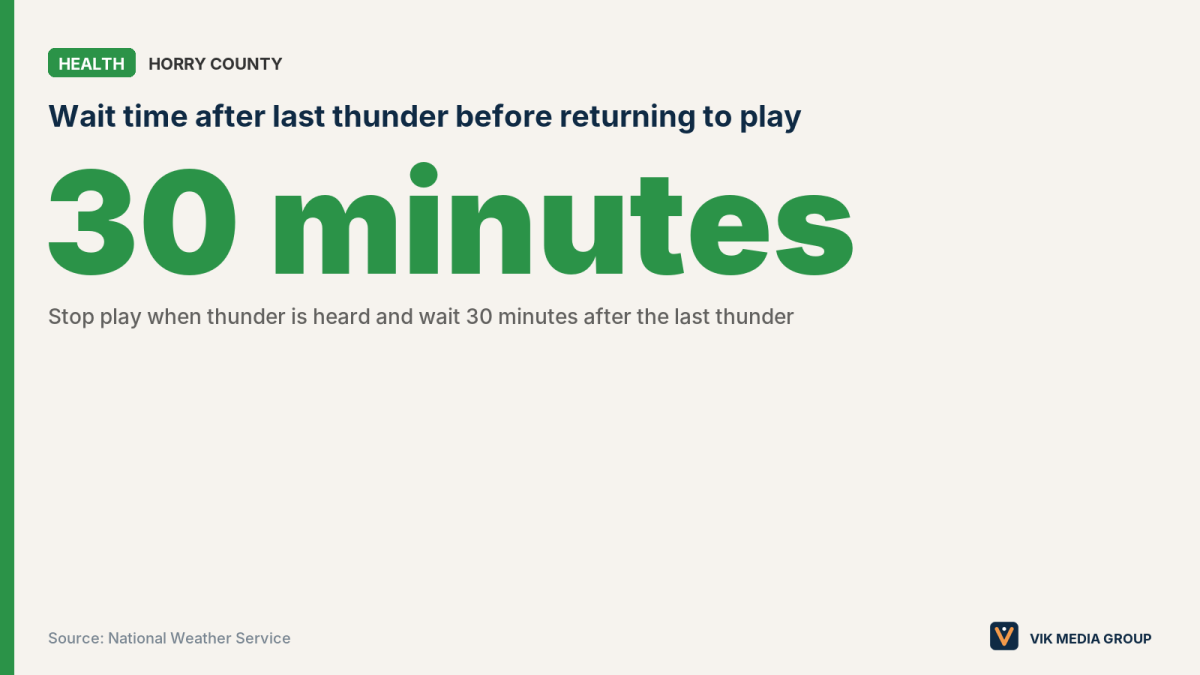
When thunder can be heard on a Grand Strand golf course, the round should stop: lightning can strike up to 10 miles from a storm, and the National Weather Service says to wait 30 minutes after the last thunder before going back out, per its lightning safety guide. For heat, NWS Wilmington issues a heat advisory for northeast South Carolina and southeast North Carolina when the heat index is expected to reach 105 to 109 degrees for two hours or more, according to NWS Wilmington.
The two risks peak in the same months. More than 70% of U.S. lightning deaths from 2006 to 2019 happened in June, July and August, according to an NWS analysis. At North Myrtle Beach, July averages 8.2 days at 90 degrees or hotter, the most of any month, per NOAA’s 1991-2020 climate normals.
What should golfers do when they hear thunder?
The weather service’s rule is short: if you can hear thunder, you are within striking range. Its guidance for anyone outdoors:
- Stop play and head for a safe shelter as soon as thunder is heard. Do not wait for rain.
- Go inside a fully enclosed building with wiring and plumbing, such as the clubhouse, or a hard-topped metal vehicle with the windows up.
- Stay away from open fairways, isolated tall trees, towers, utility poles and metal fences.
- Wait 30 minutes after the last thunder before going back out.
Lightning often strikes before the rain starts or after it seems to have ended, the NWS says.
Are golf carts and rain shelters safe in a thunderstorm?
No. The NWS lists sheds, picnic shelters, tents and covered porches as places that offer no protection from lightning. An open-sided golf cart and a course rain shelter fall in the same group: they keep the rain off, not the lightning. A hard-topped car in the parking lot is safe; an open cart on the fairway is not.
How many people are killed by lightning while golfing?
From 2006 through 2019, lightning killed 418 people in the United States. Ten of them were golfing, according to the NWS analysis. Fishing accounted for 40 deaths and beach activities for 25, both common on the Grand Strand. Males made up 79% of the people killed.
About 300 people are struck in the U.S. each year and about 30 die, the NWS says. Many survivors live with lasting pain, nerve damage or depression.
What should I do if someone is struck by lightning?
- Call 911.
- A person struck by lightning does not carry an electrical charge and is safe to touch.
- Start CPR if you are trained; cardiac arrest is the most common immediate cause of death. Use an AED if the clubhouse has one.
- If possible, move the person to a safer spot, because lightning can strike the same place again.
When is it too hot to play golf on the Grand Strand?
NWS Wilmington’s heat criteria for the area:
| Alert | Heat index | How long |
|---|---|---|
| Heat advisory | 105 to 109 degrees | 2 hours or more |
| Extreme heat watch or warning | 110 degrees or higher | 2 hours or more |
The heat index is measured in the shade, and full sunshine can raise it by up to 15 degrees, according to the NWS heat index page. A golfer in the sun can feel far more heat than the forecast number. NWS Wilmington also posts daily wet bulb globe temperature maps, which account for sun and wind, on its heat page.
The weather service’s advice for hot days is to move strenuous activity to the coolest part of the day, wear light, loose clothing, and drink water even when not thirsty, per its heat safety brochure. On a golf course that means early tee times in June, July and August.
What are the signs of heat stroke and heat exhaustion?
The CDC lists these signs in its heat illness guide:
| Heat exhaustion | Heat stroke | |
|---|---|---|
| Signs | Heavy sweating; cold, clammy skin; fast, weak pulse; nausea or vomiting; muscle cramps; tiredness or weakness; fainting | Body temperature of 103 degrees or higher; hot skin; fast, strong pulse; headache; dizziness; nausea; confusion; passing out |
| What to do | Move to a cool place, loosen clothing, apply cool wet cloths, sip water. Get medical help if the person is vomiting, gets worse or symptoms last more than an hour. | Call 911: it is a medical emergency. Move the person somewhere cooler and cool them with cloths or a cool bath. Do not give them anything to drink. |
This article explains federal safety guidance. It is not medical advice; for a health condition that affects activity in the heat, talk with a doctor.
Where do I check lightning and heat alerts before a round?
- NWS Wilmington, N.C., forecasts and alerts for Horry, Georgetown and Brunswick counties: weather.gov/ilm
- NWS lightning safety: weather.gov
- Emergencies: 911
When thunder roars, go indoors.
Played here this week? Tell us how the course was: email our newsroom through the Contact link at the bottom of this page.
More Health & Medical guides and local services ›
Live in the Grand Strand? Write for us as a Community Contributor and share what you see in your town.
Questions and answers
- Is a golf cart safe during lightning?
- No. The National Weather Service says open shelters offer no protection. Only a fully enclosed building or a hard-topped metal vehicle with the windows up is safe.
- How long should golfers wait after thunder before playing again?
- 30 minutes after the last thunder, according to the National Weather Service. Lightning can strike up to 10 miles from a storm.
- When does the NWS issue a heat advisory for Myrtle Beach?
- NWS Wilmington issues a heat advisory for northeast South Carolina when the heat index is expected to reach 105 to 109 degrees for two hours or more, and an extreme heat warning at 110 or higher.
- How many golfers are killed by lightning?
- Ten of the 418 U.S. lightning deaths from 2006 through 2019 happened while golfing, according to a National Weather Service analysis.
Sources
- National Weather Service, Lightning safety one-pager
- National Weather Service, Analysis of lightning fatalities 2006-2019
- NWS Wilmington, Heat information and criteria
- National Weather Service, Heat index
- National Weather Service, Heat safety brochure
- CDC, Heat-related illnesses: what to look for and what to do
- NOAA NCEI, Climate normals 1991-2020, North Myrtle Beach