Golf and tourism in Horry County: what the accommodations tax numbers show
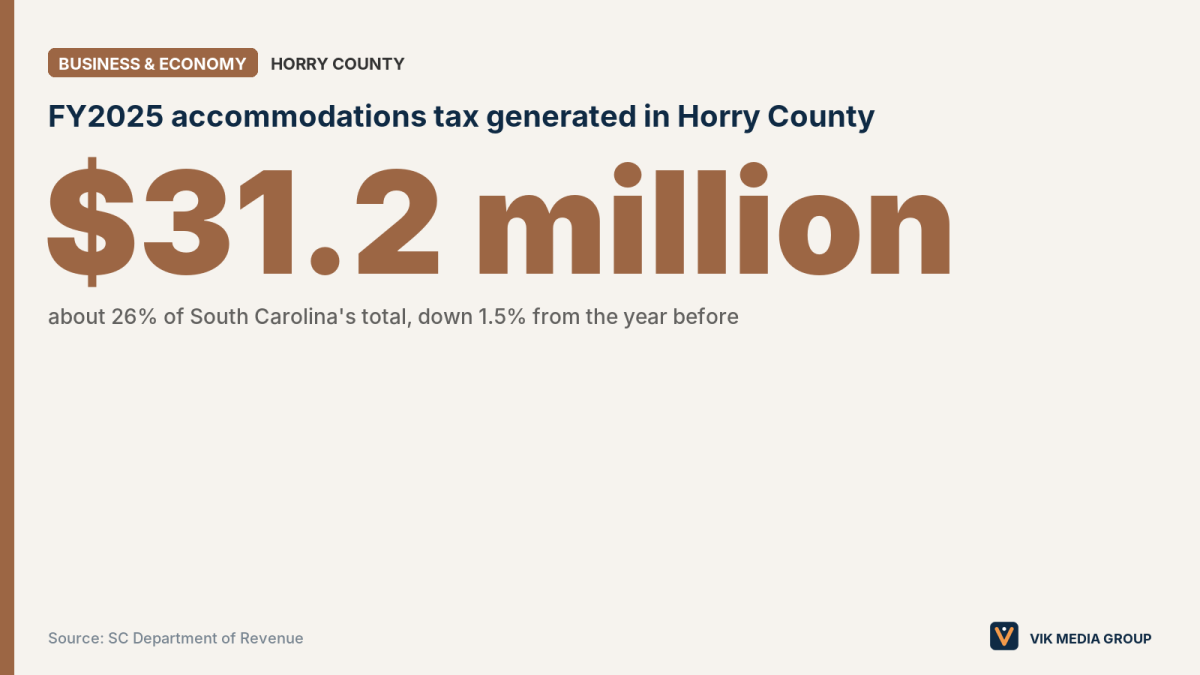
Horry County generated $31.2 million in South Carolina state accommodations tax in the 2025 fiscal year, about 26% of the $119.7 million collected statewide, according to the South Carolina Department of Revenue’s 2024-25 annual report. That was down 1.5% from $31.7 million the year before, while statewide collections rose 4.5%.
Golf shows up in a second tax. A golf course owes South Carolina’s 5% admissions tax on green fees, including the green-fee share of a golf package, according to the Department of Revenue’s accommodations policy manual. Horry County produced $14.2 million in admissions tax in fiscal 2025, also about 26% of the state total, down 8% from the year before.
What is the accommodations tax and who pays it?
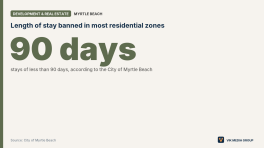
South Carolina charges a 7% sales tax on hotel rooms, condos, vacation homes, campgrounds and other places to sleep rented for less than 90 days in a row, according to the Department of Revenue. Two percentage points of that 7% are the state accommodations tax that the department reports by county. Cities and counties may add a local accommodations tax of up to 3% and a beach preservation fee of up to 1%, which they collect themselves.
Because nearly every overnight visitor pays it, the state accommodations tax is the most direct public measure of how many nights tourists spend on the Grand Strand, including golfers who come for a multi-day trip.
How much accommodations tax does Horry County collect?
| County | Fiscal 2024 | Fiscal 2025 | Change |
|---|---|---|---|
| Horry | $31,704,315 | $31,234,298 | -1.5% |
| Georgetown | $3,310,749 | $3,769,120 | +13.8% |
| South Carolina total | $114,536,856 | $119,711,082 | +4.5% |
Sources: South Carolina Department of Revenue, annual report for fiscal 2024, page 30, and annual report for fiscal 2025, page 30. South Carolina’s fiscal year runs July 1 through June 30.
Horry County’s share of the state total slipped from 27.7% in fiscal 2024 to 26.1% in fiscal 2025. Georgetown County, home to Pawleys Island and Murrells Inlet, grew faster than the state.
What does the admissions tax say about golf?
The admissions tax covers paid entry to places of amusement, and green fees are one of them. In the department’s example of a hotel golf package, the course “would be liable for the 5% admissions tax” on the part of the package that pays for the round. The tax also covers attractions, shows and other paid admissions, so the county totals include more than golf.
| County | Fiscal 2024 | Fiscal 2025 | Change |
|---|---|---|---|
| Horry | $15,472,440 | $14,236,424 | -8.0% |
| Georgetown | $1,256,293 | $1,157,602 | -7.9% |
| South Carolina total | $61,751,328 | $54,694,142 | -11.4% |
Source: South Carolina Department of Revenue annual reports, fiscal 2024 and 2025, page 31.
Where does the accommodations tax money go?
State law sends the accommodations tax back to the cities and counties where it was collected. For a county or city that receives more than $50,000, the first $25,000 and 5% of the rest go to its general fund. Then 30% of the balance must be spent “only for advertising and promotion of tourism,” and the remainder goes to a fund for tourism-related spending, under S.C. Code Section 6-4-10.
Tourism-related spending allowed by law includes advertising, arts and cultural events, civic and cultural facilities, public safety and health services that serve tourists, public restrooms and parks, tourist shuttles, waterfront erosion control, visitor information centers and workforce housing. Each county and city that receives more than $50,000 must name a seven-member advisory committee, with a majority from the hospitality industry, to recommend how to spend it, under Section 6-4-25.
What do these numbers not show?
The state does not report a golf-only figure. The accommodations tax counts all overnight stays, and the admissions tax counts all paid admissions, not only green fees. Brunswick County, North Carolina, collects its own room occupancy tax under North Carolina law, so it is not in the South Carolina figures.
Where can I find the official reports?
- South Carolina Department of Revenue annual reports, with tax collections by county: dor.sc.gov
- State accommodations tax law, Title 6, Chapter 4: scstatehouse.gov
Played here this week? Tell us how the course was: email our newsroom through the Contact link at the bottom of this page.
More Business Services guides and local services ›
Live in the Grand Strand? Write for us as a Community Contributor and share what you see in your town.
Questions and answers
- How much accommodations tax does Horry County collect?
- $31,234,298 in South Carolina's 2025 fiscal year, which ended June 30, 2025, according to the SC Department of Revenue. That was about 26% of the state total.
- Do golf green fees pay tax in South Carolina?
- Yes. Golf courses owe the state's 5% admissions tax on green fees, including the green-fee portion of a golf package, according to the SC Department of Revenue.
- What is the hotel tax in Myrtle Beach, South Carolina?
- The state charges a 7% sales tax on rentals of rooms and other accommodations for less than 90 days. Cities and counties may add up to 3% in local accommodations tax and up to 1% in beach preservation fees.
- What is accommodations tax money used for in South Carolina?
- After a share for the general fund, 30% must go to tourism advertising and promotion, and the rest to tourism-related spending such as visitor facilities, public safety for tourists and beach erosion control, under S.C. Code 6-4-10.